




Software Entwicklung hat sich heute als entscheidender Anwendungsfall für generative KI etabliert, wobei die Hälfte aller auf OpenRouter verbrauchten Token für die Codegenerierung verwendet wird. Cursor zum Beispiel ist in den letzten 12 Monaten von 100 Millionen auf 4 Milliarden Dollar ARR gestiegen. Wir befinden uns im ersten Innings des größten Wandels in der Geschichte der Softwareentwicklung: von Menschen, die manuell Code schreiben, hin zu Schwärmen langjähriger KI-Agenten, die autonom Software entwickeln. Der Softwareentwicklungszyklus wird komplett neu definiert, wobei neue Primitive und Prozesse in Echtzeit gebaut werden, um mit der Geschwindigkeit der agentischen Codegeschwindigkeit Schritt zu halten.
Das traditionelle SDLC hatte einen natürlichen, eingebauten Engpass in der "Build"-Phase, in der Menschen Code von Hand schrieben. Dieser Prozess, Code manuell zu schreiben, wirkte als Rate-Limiter für den Rest des SDLC-Prozesses, sodass genügend Zeit für andere Funktionen war, sowohl für die Upstream (Planung) als auch für Downstream (Testing, Sicherheit, CI/CD, Speicher) der Codegenerierung.
Da Coding-Agenten Code in einem Bruchteil der Zeit bauen, die Menschen können, ist der Rest des SDLC – Planung, Test, Sicherheit, Codespeicherung – am Rande und versucht, in einem Tempo zu arbeiten, für das die bestehende Infrastruktur und Arbeitsabläufe nicht entwickelt wurden.
Wir sehen, wie ein neues agentisches SDLC mit vielen der gleichen Elemente wie das alte SDLC gebaut wird, aber für das Zeitalter des agentischen Codings neu interpretiert wird. Wir haben sowohl mit Führungskräften als auch bei Startups und Unternehmen sowie mit den Gründern gesprochen, die die nächste Generation von Dev-Tools aufbauen. Basierend auf diesen Gesprächen haben wir aufgeschlüsselt, wie jeder Teil des SDLC umgestaltet wird.
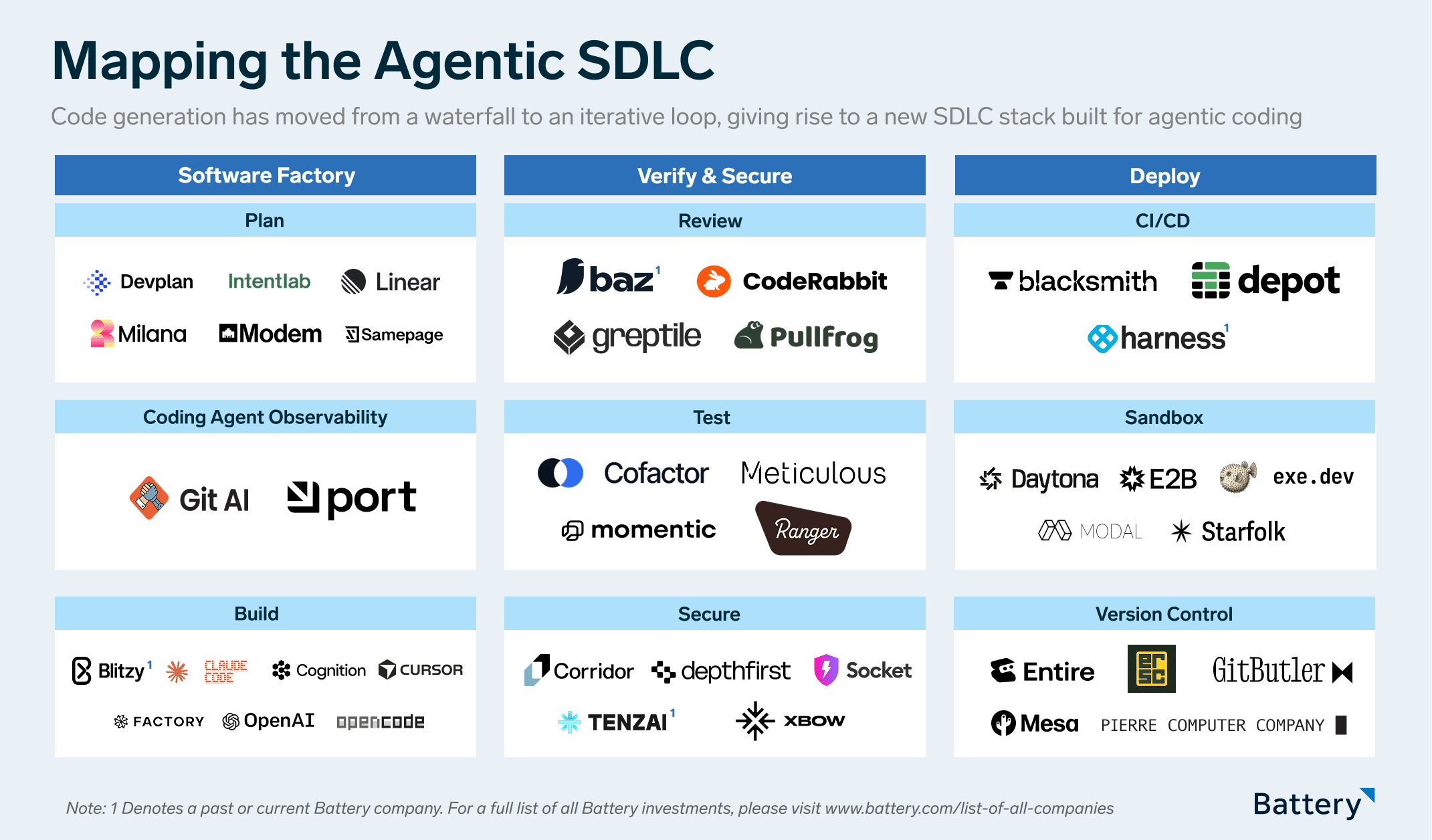
1. Planung & Triaging – Der Always-On Product Manager
Der erste Schritt beim Softwarebau ist herauszufinden , was man bauen soll und warum . Da die Kosten für das Schreiben von Code bei KI auf null zusteuern, sehen wir aus erster Hand die Folgen schlechter Priorisierung und Planung. "KI-Müll" hat sich vermehrt, mit schlecht geplanten Produkten und Funktionen, die in die Produktion gebracht werden. SaaS-Menübalken sehen aus wie Menüs der Cheesecake Factory und verwirren Nutzer, die mit der Flut neuer Produkte nicht Schritt halten können, die sie nicht brauchen oder angefordert haben. Neue iOS-Apps sind im Jahresvergleich um 60 % gestiegen, aber insgesamt sind die App-Downloads zurückgegangen, was zeigt, dass mehr Optionen nicht zwangsläufig mehr Engagement bedeuten.
Eine neue Klasse von Unternehmen wie Linear, Modem und Intent Lab entwickelt Tools, die Produkt- und Ingenieurteams dabei helfen, im Tempo der KI zu planen. Diese Tools helfen Teams, den Kontext zu verwalten, Kundenfeedback zu sammeln und zu triagieren sowie Roadmaps im Umfang zu gestalten, damit die richtigen Funktionen ausgeliefert werden. Sobald Prioritäten gesetzt sind, helfen sie, diese in Spezifikationen und Kontextcodes zu übersetzen, mit denen Agenten genau das bauen können, was ursprünglich vorgesehen war.
2. Bau, Überprüfung und Test – Software Fabriken
Im Zentrum des agentischen SDLC stehen Codingeragenten, die neuen Code schreiben. Die Kategorie hat sich schnell weiterentwickelt, von "Copiloten" und "Pair-Programming"-Tools wie GitHub Copilot über Cursors Autocomplete-Tab-Modell bis hin zu nun vollständig autonomen Codierern wie Claude Code, Cursor, Cognition, Factory und Blitzy*, die End-to-End-Funktionen bauen können, ohne dass ein Mensch auch nur eine einzige Codezeile schreiben muss.
Hinter der Codegenerierung selbst erfolgt die Codeprüfung und das Testen. Wenn Junior-Ingenieure täglich Tausende von Codezeilen mit Hilfe ihres Coding-Agenten schreiben können, wird es für leitende Review- oder Testteams nahezu unmöglich, den gesamten Code manuell effektiv zu überprüfen und zu testen. Wir sehen, dass neue spezialisierte Tools entstehen, um Code-Review und -Tests mit KI zu bewältigen, aber wir sehen auch, dass Coding-Agenten wie Cursor und Cognition Code-Review und -Testing in ihre agentische Schleife oder eine breitere Plattform integrieren. Viele Unternehmen, mit denen wir gesprochen haben, sind skeptisch, wenn KI KI überprüft, sehen aber keine andere Möglichkeit, das von Coding-Agenten geschriebene Code-Volumen zu bewältigen.
Während heute viele dieser vollständig autonomen Codierungsagenten für "Brownfield"-Code-Refactoring und die Migration von Legacy-Code in modernere Sprachen verwendet werden, da sich Foundation-Modelle und Agenten-Harnesses verbessern, glauben wir, dass diese Agenten zunehmend auch für die "Greenfield"-Entwicklung neuer Code eingesetzt werden und Teil herstellerneutraler Softwarefabriken werden, die Upstream-Kontext mit den besten Codierern für einen bestimmten Auftrag verbinden. Wir beobachten dies bereits in zukunftsorientierten Unternehmen wie Ramp, Stripe und Coinbase, die jeweils ihre eigenen internen, vollautonomen Softwarefabriken entwickelt haben.
3. Sicherheit – Sicherung des Codebas
Die zunehmende Menge an Code, die heute von KI generiert wird, vergrößert die Angriffsfläche für Codebasen. Gleichzeitig sind Böswichte nun mit leistungsstarken KI-Modellen ausgestattet, mit denen sie Schwachstellen schneller finden können, als Verteidiger sie beheben können. Anthropics Mythos-Modell hat Berichten zufolge Tausende von Schwachstellen in den Kern-Betriebssystemen und Webbrowsern gefunden, die heute das Internet antreiben, und Open-Source-Softwarepakete stehen scheinbar alle zwei Wochen unter Beschuss neuer Lieferketten-Angriffe. Schwachstellenmanagement, Lieferkettensicherheit und Penetrationstests sind hochrangige P0-Prioritäten für Ingenieur- und Sicherheitsführungskräfte, mit denen wir sprechen.
Wir kommen an den Punkt, an dem "KI überprüft KI" kein unangenehmer Kompromiss mehr ist, sondern die einzige praktikable Antwort ist. Menschen waren bereits der Engpass in der Sicherheitsprüfung, bevor der Agentic Code aufkam, daher ist das kein neues Problem, sondern nur eine viel dringendere Version eines alten. Neuere Arten von KI-nativen Tools entstehen, um Sicherheitsteams bei der Abwehr von Angriffen zu unterstützen. Tools wie DepthFirst, Socket, Tenzai* und Corridor ermöglichen es CISOs, ihre Codebasen proaktiv zu sichern, und wir sind überzeugt, dass agentische Sicherheitstools künftig ein zentraler Bestandteil der Codesicherung werden werden.
4. CI/CD & Sandboxes – Neubau-Pipelines für Agenten
Bestehende Build-Pipelines haben Schwierigkeiten, mit dem agentengesteuerten Codevolumen Schritt zu halten, was Teams zu Next-Gen-Pipelines für kontinuierliche Integration drängt, die auf die Geschwindigkeit des agentischen Codings zugeschnitten sind.
Sandboxes sind als wesentlicher Bestandteil des CI/CD-Prozesses für agentische Codierung entstanden und bieten Coding-Agenten eine Umgebung, um den von ihnen geschriebenen Code zu erstellen und zu testen. Diese Sandboxes ermöglichen den Zustand und die Isolierung von Code, sodass langlaufende Agenten über lange Zeithorizonte hinweg bauen können, ohne den Produktionscodebestand durch Halluzinationen zu schädigen oder Sicherheitslücken freizulegen. Der rasante Aufstieg von Sandbox-Lösungen wie Modal, Daytona, E2B, Starfolk und exe.dev zeigt, wie zentral diese Schicht für das agentische SDLC geworden ist.
5. Codespeicherung – Next-Gen-Versionskontrolle für agentische Geschwindigkeit
Die Infrastruktur von GitHub wurde auf die menschliche Code-Geschwindigkeit ausgelegt, nicht auf agentische Code-Geschwindigkeit. Das von der Plattform empfohlene Limit von maximal 6 Commits pro Minute pro Repository ist mehr als ausreichend, wenn Menschen Code schreiben, aber bei weitem nicht das Codevolumen, das KI-Agenten in den KI-nativsten Organisationen schreiben. Infolgedessen sind GitHub-Ausfälle im Jahr 2026 zu einem häufigeren Bestandteil des Lebens geworden, wobei mehrere größere Vorfälle Entwickler auf der Suche nach alternativen Lösungen gezwungen haben.
Neue Lösungen wie Code Storage von der Pierre Computer Company, East River Source Control und Origin von Cursor versuchen, Code-Speicher-Primitive zu entwickeln, die mit der Geschwindigkeit des Codierungsagenten kompatibel sind. Wir sind überzeugt, dass diese Code-Speicherlösungen zu Sandboxing-Lösungen erweitert werden, um CI/CD zu besitzen, nach dem Modell von GitHub und GitHub Actions, bei denen sowohl Speicher als auch die Pipelines darum herum besaßen. KI-native Organisationen wie Lovable wechseln bereits von GitHub zu diesen neuen Lösungen – ein Trend, von dem wir erwarten, dass er sich fortsetzen wird, da die Code-Geschwindigkeit in verschiedenen Organisationen zunimmt.
Wir sind noch sehr früh im Wandel zum KI-Coding. In unserer jüngsten Umfrage unter Führungskräften im Bereich Unternehmenstechnologien gaben die meisten an, dass sie GitHub Copilot weiterhin für agentisches Programmieren nutzen und der meiste Code weiterhin von Hand geschrieben wird. Da agentic coding sich im Unternehmen verbreitet, erwarten wir, dass dieses neue agentic SDLC immer wichtiger wird und eine generationenübergreifende Chance für Entwickler-Tool-Gründer während eines Plattformwechsels darstellt. Wenn Sie dieses neue agentische SDLC einbauen, würden wir uns freuen, von Ihnen zu hören!
Die hier enthaltenen Informationen basieren ausschließlich auf den Meinungen von Abhi Agrawal, Sudhee Chilappagari, Danel Dayan und Jason Mendel, und nichts sollte als Anlageberatung ausgelegt werden. Dieses Material dient Informationszwecken und ist nicht und darf in keiner Weise als rechtliche, steuerliche oder Anlageberatung oder als Verkaufsangebot oder als Aufforderung zum Kauf eines Anteils an einem von Battery Ventures oder einer anderen Battery Gesellschaft verwalteten Fonds oder Anlagevehikel herangezogen werden.
Diese Informationen umfassen Investment- und Marktaktivitäten, Branchen- oder Sektortrends oder andere allgemeine Wirtschafts- oder Marktbedingungen und dienen zu Bildungszwecken. Die anekdotischen Beispiele sind für ein Publikum von Unternehmer*innen gedacht, die ihre Unternehmen aufbauen möchten, und sind keine Empfehlungen oder Befürwortungen für ein bestimmtes Unternehmen.
*Bezeichnet Battery Portfolio Eine vollständige Liste aller Battery finden Sie unter Bitte klicken Sie hier.










Treten Sie der Battery-Mailingliste bei
Von Unternehmensaufbau-Einblicken bis hin zu den neuesten Forschungen und Perspektiven von Battery – bleiben Sie über die für Sie wichtigsten Themen informiert.