




Nach mehreren Jahren mit Rekordinvestitionen wachsen die Budgets für Unternehmens-KI weiterhin . Laut unserer neuesten Umfrage zu den Ausgaben für Unternehmenstechnologien erhöhen 98 % der Befragten ihre KI-Ausgaben in den nächsten 12 Monaten, und kein einziger befragter CXO kürzt. Doch mit wachsender Budgets setzt das eine schwierigere Frage unter Druck: Wo sind die Renditen?
Die meisten Organisationen erzielen messbare Erträge für KI – aber nur sehr wenige können beweisen, wie bedeutsam KI für das gesamte Unternehmen ist. Dreiundfünfzig Prozent der Unternehmenstechnologie-Führungskräfte geben an, dass sie heute einen klaren ROI in einigen Bereichen der KI-Investitionen sehen. Aber nur 6 % haben ein klar definiertes Messkonzept, das den ROI innerhalb der gesamten Organisation konsistent verfolgt. Weitere 42 % messen in einigen Bereichen, aber nicht konsequent, während 43 % noch definieren, wie man überhaupt messen soll.
Diese Kluft – zwischen Organisationen, die glauben, dass KI funktioniert, und Organisationen, die nachweisen können, dass KI funktioniert, mit nachweisbarer ROI – ist derzeit eines der folgenschwersten Probleme in der Unternehmenstechnologie.
Die meisten Projekte liefern noch keinen messbaren ROI
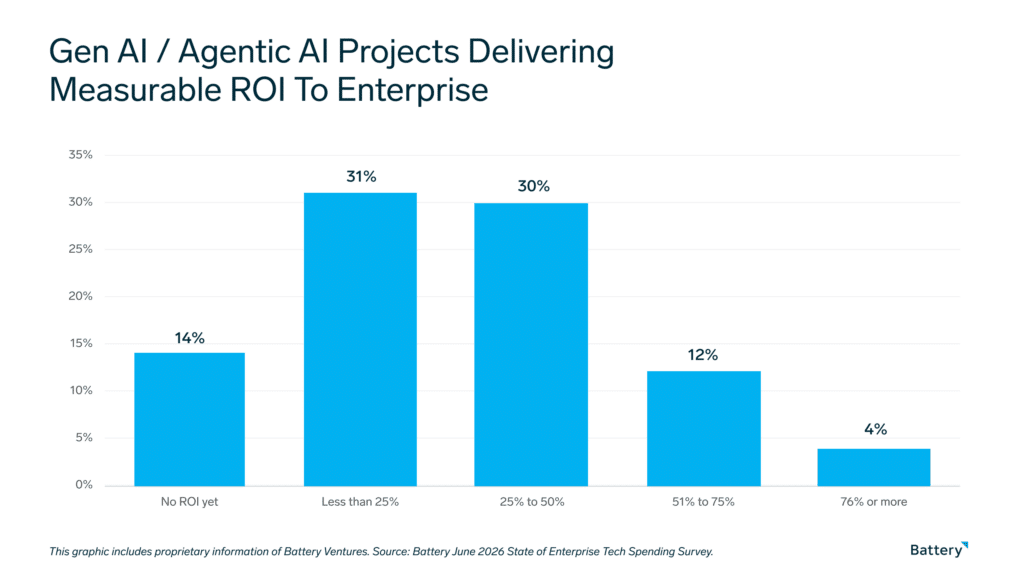
Vierzehn Prozent der Organisationen geben an, dass keines ihrer KI-Projekte bisher messbare Rendite erzielt hat, und 31 % sagen, dass weniger als 25 % der Projekte dies getan haben. Nur 16 % der Befragten gaben an, dass mehr als die Hälfte der Projekte messbare Renditen erzielt.
Das bedeutet nicht zwangsläufig, dass die Investitionen falsch oder fehlgeleitet sind; Es könnte bedeuten, dass die Messinfrastruktur nicht mit der Einsatzgeschwindigkeit Schritt gehalten hat. Und wenn die Führung fragt, wohin das Geld fließt, haben die meisten Technologieteams noch keine vollständige Antwort.
Wo die Renditen am deutlichsten sind
Achtundzwanzig Prozent der befragten CXOs nannten Softwareentwicklung und Engineering-Produktivität als den Bereich mit dem klarsten ROI innerhalb ihrer Organisation. Diese Funktionen, zu denen Codierungsassistenten und automatisierte QA-Tests gehören, liefern messbare Produktivitätssteigerungen, die relativ leicht zu verfolgen sind. Interne Abläufe / Workflow-Automatisierung und Kundensupport runden die Top drei ab.
Wie die ROI gemessen wird
Die Kennzahlen sind in Richtung Kosten und Effizienz ausgerichtet. Kosteneinsparungen oder Senkung der Betriebskosten sind der gebräuchlichste Messansatz mit 76 %, gefolgt von der Produktivität oder Zeiteinsparung der Mitarbeiter mit 73 % und einer Liefergeschwindigkeit von 61 %. Umsatzbasierte Kennzahlen hinken hinterher – nur 38 % verfolgen den generierten Umsatz oder werden KI zugeschrieben – was sowohl die Schwierigkeit der Attribution als auch die frühere Phase der umsatzgenerierenden KI-Implementierungen widerspiegelt.
Diese Verzerrung zeigt sich erneut, als wir die Führungskräfte gefragt haben, wo sie erwarten, dass der Wert letztlich landen wird. Sechsundvierzig Prozent der Organisationen erwarten, dass KI-Wert als ausgewogene Mischung aus Kostensenkung und Umsatzwachstum entsteht. Sechsundzwanzig Prozent erwarten, dass sie vor allem das Gewinnergebnis erreicht, während nur 16 % hauptsächlich auf das Wachstum des Umsatzes setzen.
Der Budgetdruck steigt
Fast 80 % der KI-Budgets enthalten eine Umverteilungskomponente – sie stammen aus bestehenden SaaS-Ausgaben, Personalbesetzung oder Infrastruktur. Da diese Umverteilung in Haushaltsüberprüfungen immer sichtbarer wird, wird die ROI-Diskussion intensiver werden. Organisationen, die jetzt vor der Prüfung konsistente Messrahmen entwickeln, werden in einer viel stärkeren Position sein, wenn die Fragen schwieriger werden.
Die ROI-Frage ist kein zukünftiges Problem mehr. Es ist die Gegenwart.
Dieser Beitrag ist Teil der Unternehmensausgaben-Berichtsreihe 2026 von Battery. Laden Sie den vollständigen Bericht herunter.
Die in diesem Marktkommentar enthaltenen Informationen basieren ausschließlich auf den Meinungen von Nick Elsner, Scott Goering und Evan Witte, und nichts sollte als Anlageberatung ausgelegt werden. Dieses Material dient Informationszwecken und ist nicht und darf in keiner Weise als rechtliche, steuerliche oder Anlageberatung oder als Verkaufsangebot oder als Aufforderung zum Kauf eines Anteils an einem von Battery Ventures oder einer anderen Battery Gesellschaft verwalteten Fonds oder Anlagevehikel herangezogen werden. Die hier geäußerten Ansichten sind ausschließlich die der Autoren.
Die obigen Informationen können Prognosen oder andere zukunftsgerichtete Aussagen zu zukünftigen Ereignissen oder Erwartungen enthalten. Vorhersagen, Meinungen und andere Informationen, die in dieser Veröffentlichung diskutiert werden, können sich ständig und ohne Vorankündigung ändern und sind nach dem angegebenen Datum möglicherweise nicht mehr zutreffend. Battery Ventures übernimmt keine Verpflichtung und verpflichtet sich nicht, zukunftsgerichtete Aussagen zu aktualisieren.










Ein monatlicher Newsletter zum Austausch neuer Ideen, Erkenntnisse und Einführungen, um Unternehmer*innen beim Ausbau ihres Geschäfts zu helfen.